CRAFTSMANSHIP
CHEMISTRY
The Process
TINTYPE
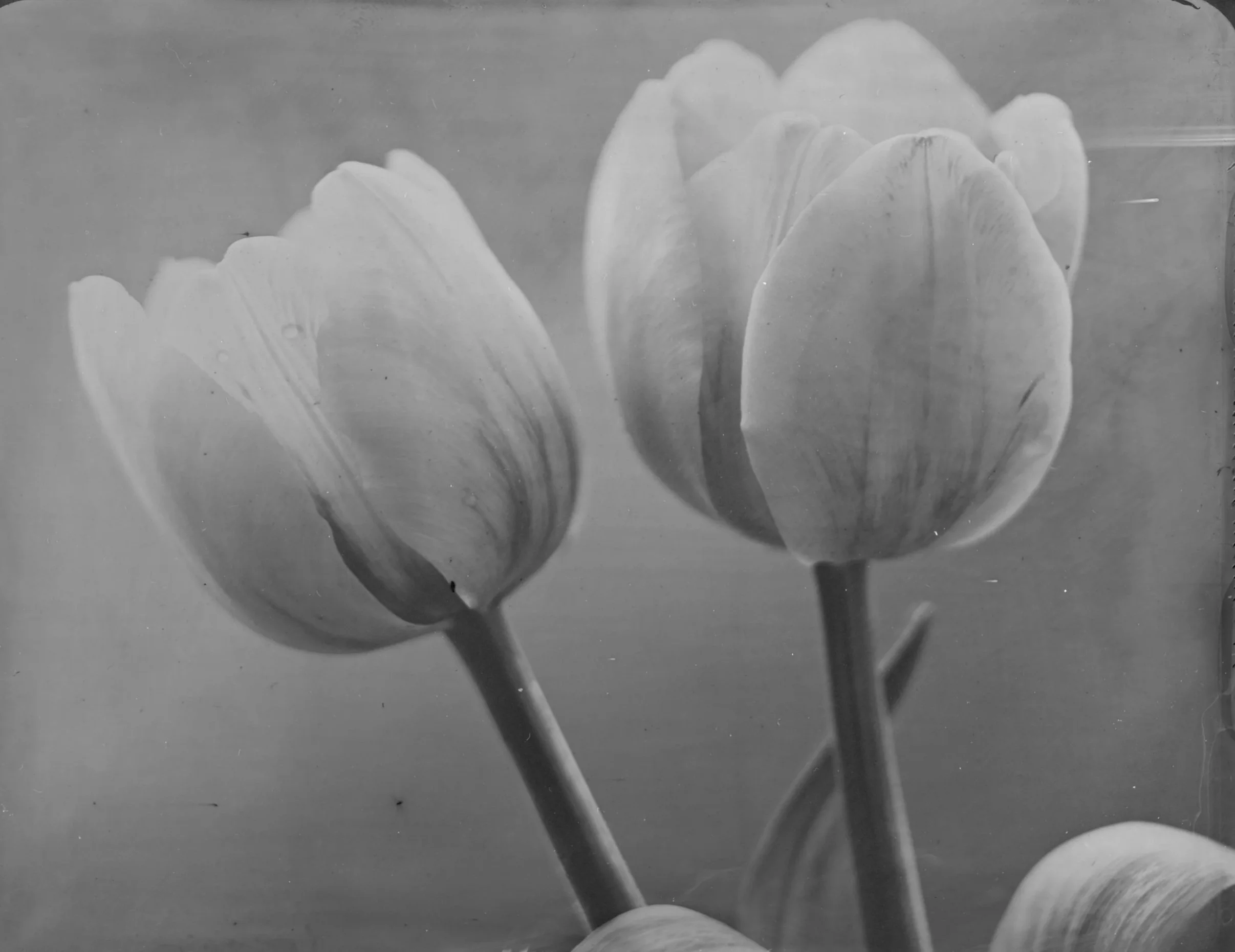
Every tintype created in the studio is made by hand using the wet plate collodion process, a photographic technique invented by Frederick Scott Archer in 1851. Unlike modern photography, there is no film, sensor, or digital editing. Each photograph is crafted one at a time and becomes a one-of-a-kind original that can never be exactly duplicated.
The Experience
-
The Plate
Your portrait begins with a carefully prepared on a black painted aluminum plate. The plate is coated by hand with a syrup-like solution called collodion, then submerged in a bath of silver nitrate, which makes it sensitive to light. Once sensitized, the plate must remain wet throughout the entire process—giving the technique its name: wet plate collodion.
-
The Camera
The plate is loaded into a large-format camera while still wet. The studio offers both 4×5 and 8×10 plates. Because this historic process is much less light-sensitive than modern photography, you'll be asked to hold still for a few seconds while your portrait is made.
-
The Darkroom
Immediately after the exposure, the plate returns to the darkroom, where the image is developed and fixed by hand. Within minutes, the portrait slowly appears before your eyes—a magical moment that has captivated photographers and clients for more than 170 years.
-
The Photograph
Because every plate is hand-coated, hand-developed, and made individually, subtle variations, streaks, edge effects, or tiny imperfections are not flaws—they're signatures of an authentic handcrafted process. No two tintypes are ever exactly alike.
The Science
-
The Collodion & Silver
The collodion contains soluble iodide and bromide salts that react with the silver nitrate bath to form silver iodide and silver bromide, compounds that are sensitive to light. When exposed inside the camera, these silver compounds record the pattern of light falling on the plate.
-
The Plate
The photograph is created on a black painted aluminum plate. The finished tintype is actually an underexposed negative viewed against a black metal background, creating the illusion of a positive image. This is why tintypes have their distinctive silvery highlights, deep blacks, and remarkable depth.
-
The Development
A developer containing ferrous sulfate (iron) reduces the exposed silver compounds into tiny particles of metallic silver, revealing the image. A fixer then dissolves the remaining unexposed silver compounds, making the photograph permanent and no longer sensitive to light.
-
The Photograph
The chemistry is naturally most sensitive to blue and ultraviolet light, while reds appear darker than they do in everyday life. Freckles often become more prominent, blue eyes can appear luminous, and certain clothing colors may photograph quite differently than expected. These unique characteristics are part of what gives tintypes their timeless, ethereal appearance.